Regent's Slide
Regent's Slide
Regent's Slide
Regent's Slide
Regent’s Slide, Big Sur, California
Regent’s Slide, Big Sur, California
Regent’s Slide, Big Sur, California
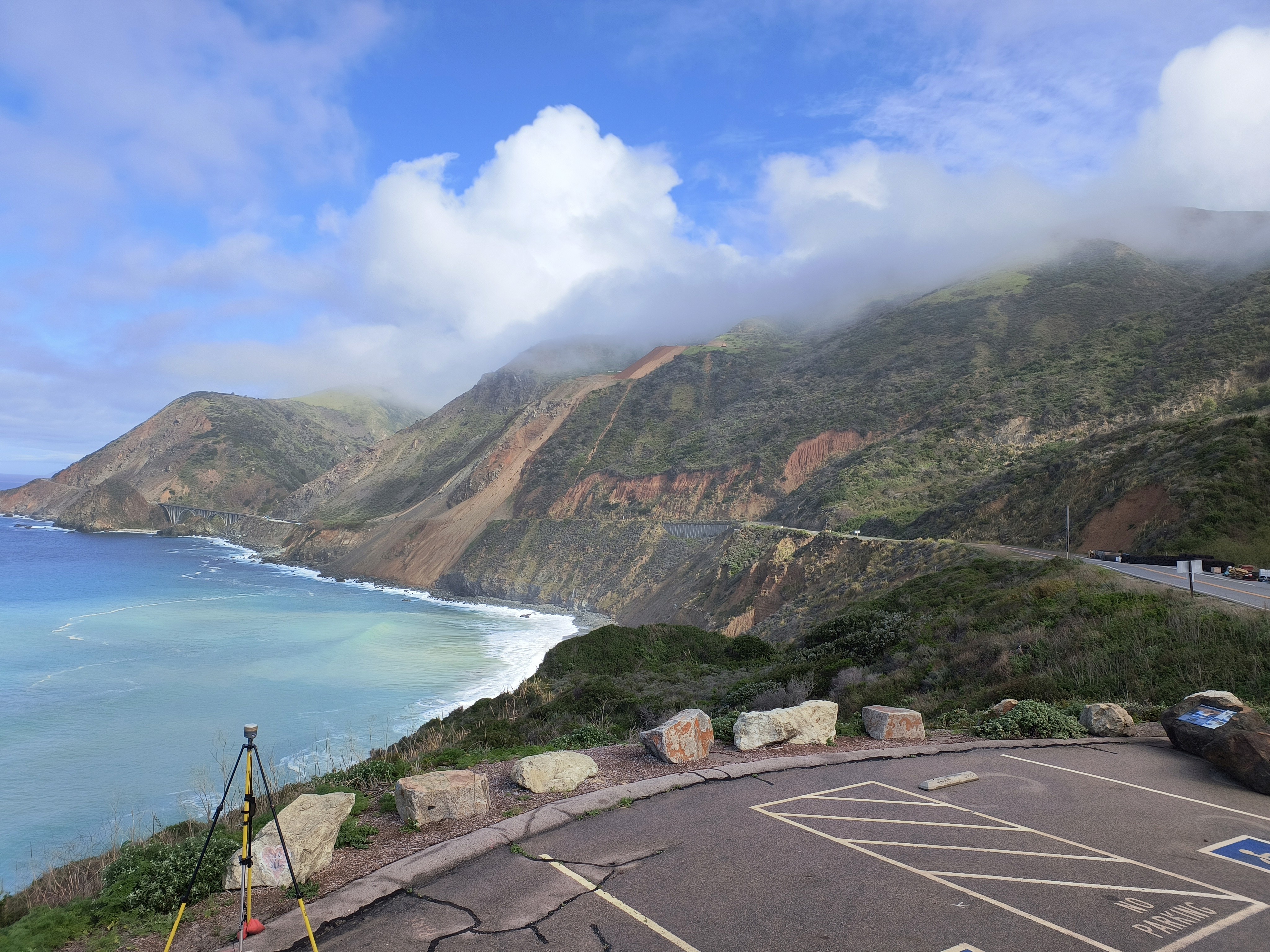
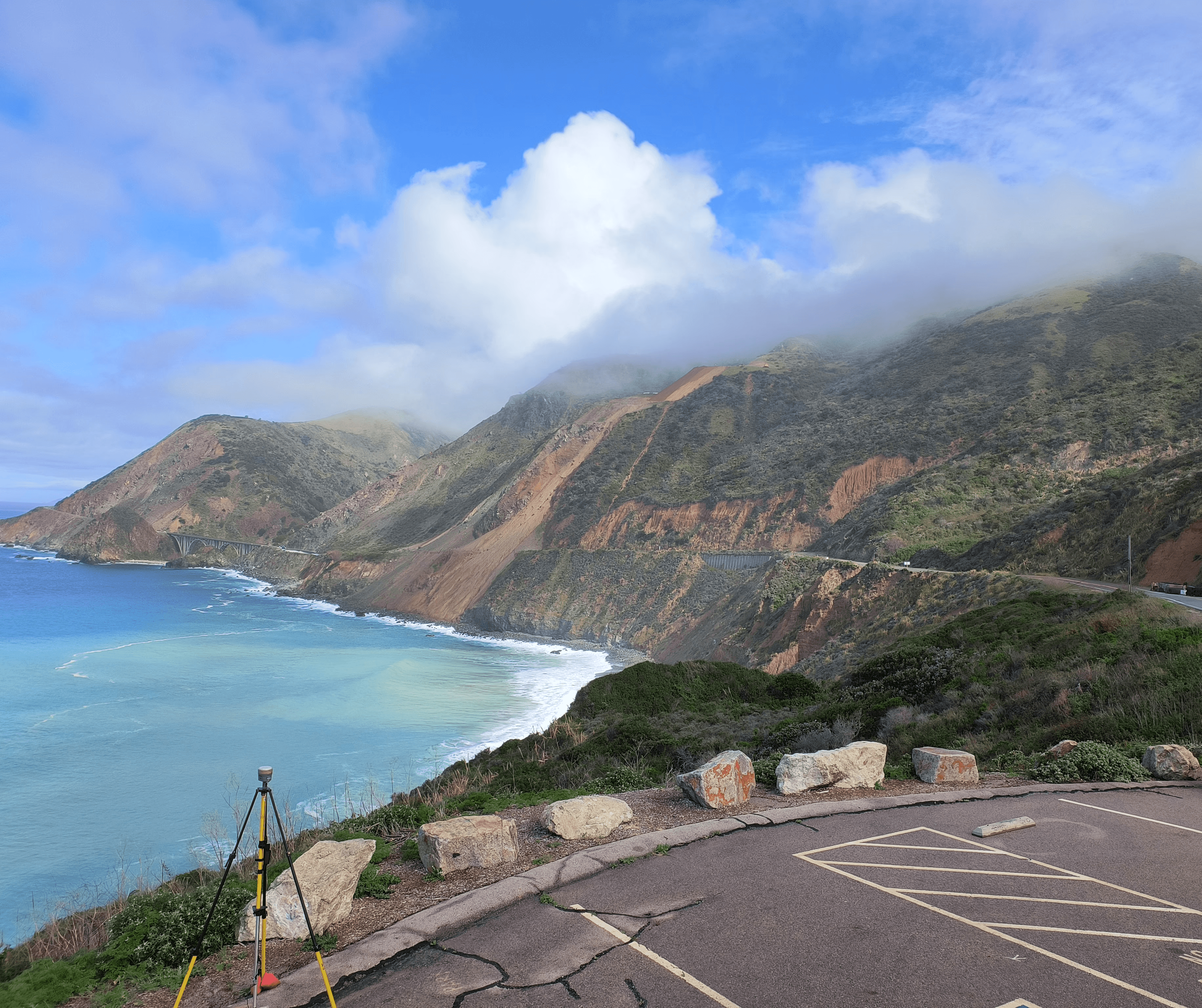
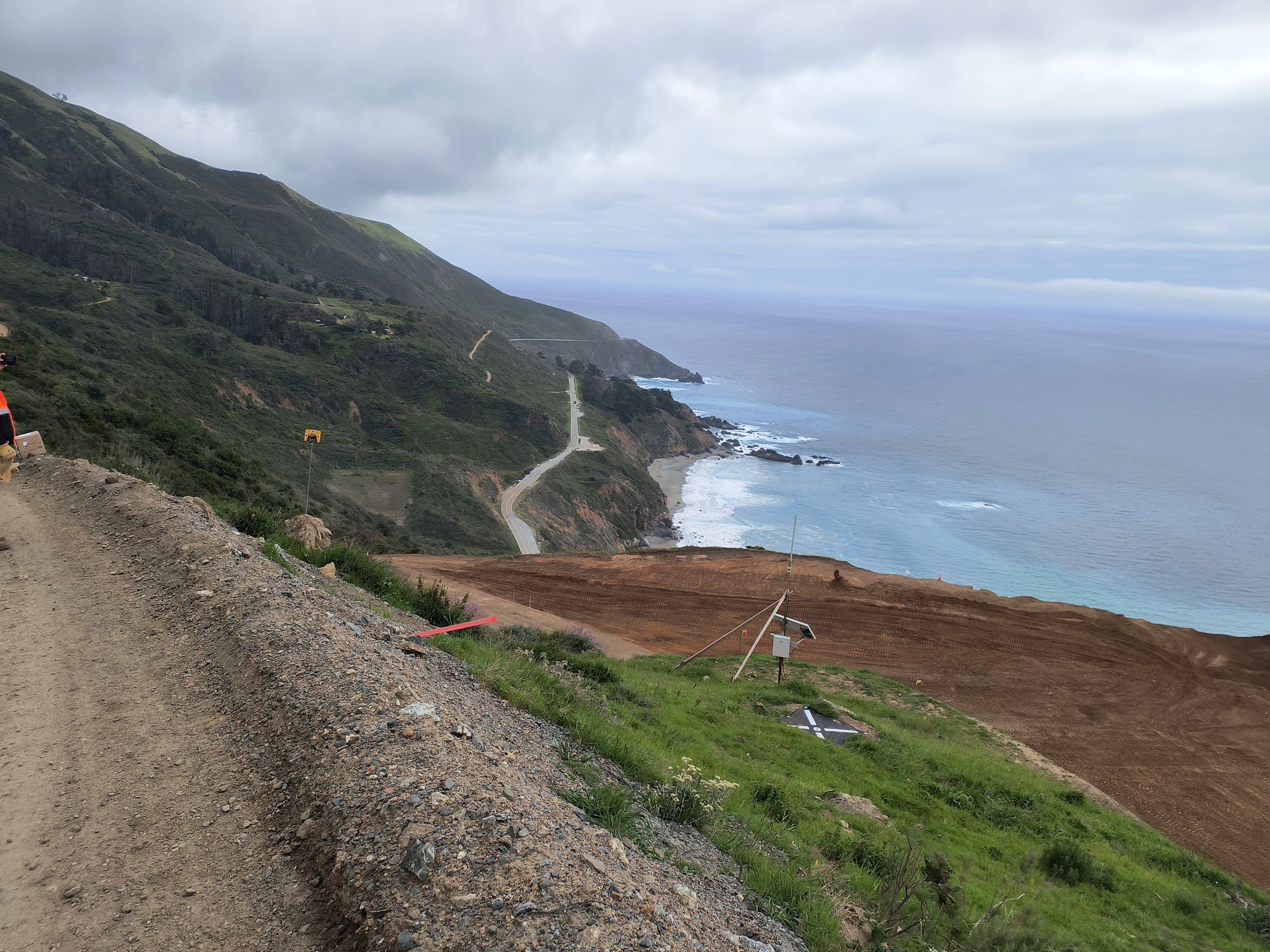
Regent's Slide is a major coastal landslide located along California State Route 1 in Big Sur, an area where steep coastal terrain, fractured rock, and seasonal moisture make slope instability a recurring challenge. In early 2024, a significant slope failure destroyed part of the highway, cutting off access along one of California’s most important coastal transportation routes and creating immediate concerns for public safety, emergency access, and long-term roadway restoration.
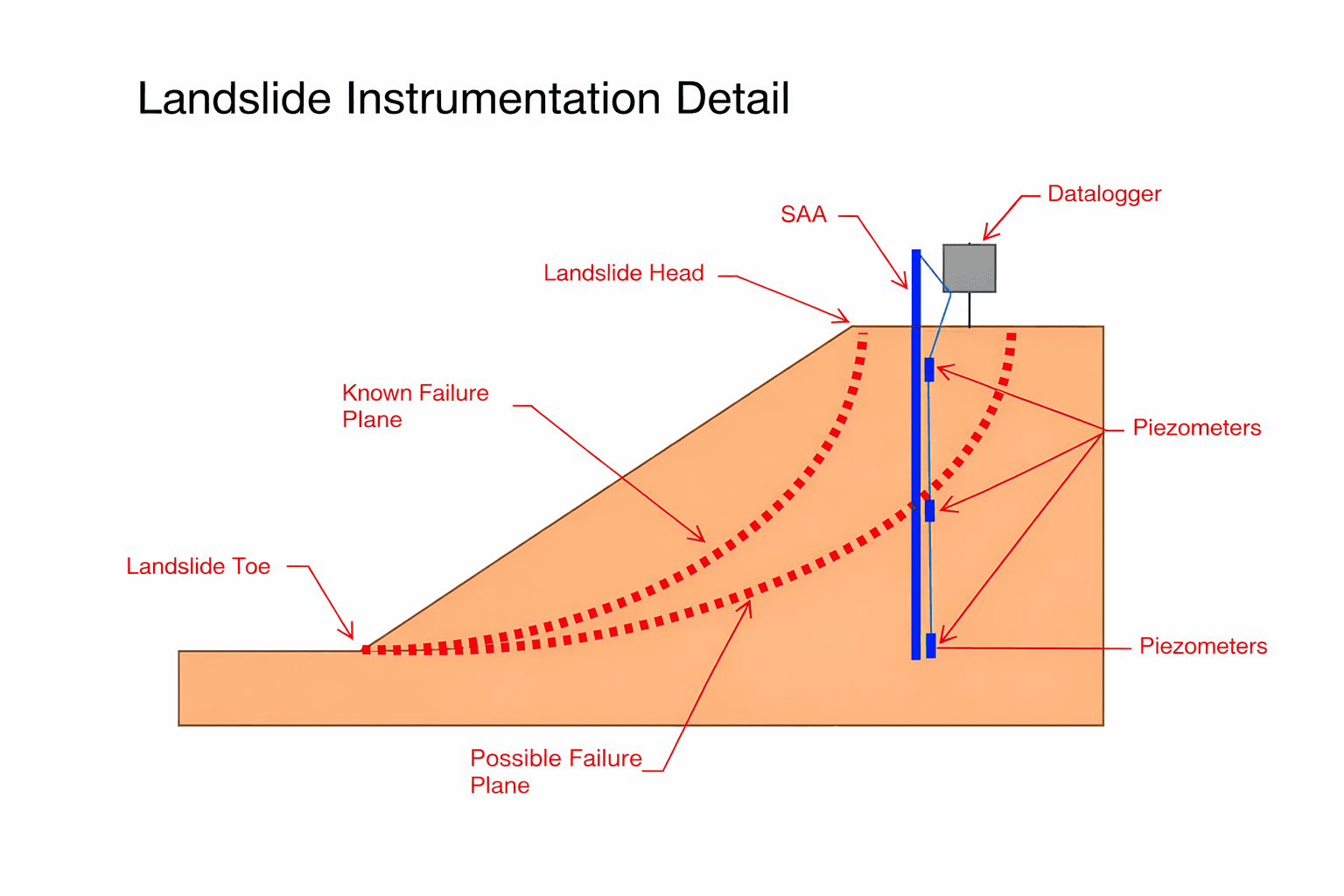
The slide proved difficult to stabilize because movement continued beyond the initial failure zone. As excavation and material removal began, additional portions of the hillside kept moving farther upslope, making it difficult to define the true failure plane and determine when crews could safely continue work. This created both construction risk and uncertainty for project planners, since removing unstable material too early could trigger further movement, while waiting too long would extend closures and increase project costs.
Because of these conditions, continuous geotechnical monitoring became necessary to understand how the slope was behaving in real time, identify where stable ground existed beneath the slide mass, and provide engineers with data that could support safe decision-making during excavation and stabilization efforts.
Regent's Slide is a major coastal landslide located along California State Route 1 in Big Sur, an area where steep coastal terrain, fractured rock, and seasonal moisture make slope instability a recurring challenge. In early 2024, a significant slope failure destroyed part of the highway, cutting off access along one of California’s most important coastal transportation routes and creating immediate concerns for public safety, emergency access, and long-term roadway restoration.
The slide proved difficult to stabilize because movement continued beyond the initial failure zone. As excavation and material removal began, additional portions of the hillside kept moving farther upslope, making it difficult to define the true failure plane and determine when crews could safely continue work. This created both construction risk and uncertainty for project planners, since removing unstable material too early could trigger further movement, while waiting too long would extend closures and increase project costs.
Because of these conditions, continuous geotechnical monitoring became necessary to understand how the slope was behaving in real time, identify where stable ground existed beneath the slide mass, and provide engineers with data that could support safe decision-making during excavation and stabilization efforts.
Regent's Slide is a major coastal landslide located along California State Route 1 in Big Sur, an area where steep coastal terrain, fractured rock, and seasonal moisture make slope instability a recurring challenge. In early 2024, a significant slope failure destroyed part of the highway, cutting off access along one of California’s most important coastal transportation routes and creating immediate concerns for public safety, emergency access, and long-term roadway restoration.
The slide proved difficult to stabilize because movement continued beyond the initial failure zone. As excavation and material removal began, additional portions of the hillside kept moving farther upslope, making it difficult to define the true failure plane and determine when crews could safely continue work. This created both construction risk and uncertainty for project planners, since removing unstable material too early could trigger further movement, while waiting too long would extend closures and increase project costs.
Because of these conditions, continuous geotechnical monitoring became necessary to understand how the slope was behaving in real time, identify where stable ground existed beneath the slide mass, and provide engineers with data that could support safe decision-making during excavation and stabilization efforts.
Regent's Slide is a major coastal landslide located along California State Route 1 in Big Sur, an area where steep coastal terrain, fractured rock, and seasonal moisture make slope instability a recurring challenge. In early 2024, a significant slope failure destroyed part of the highway, cutting off access along one of California’s most important coastal transportation routes and creating immediate concerns for public safety, emergency access, and long-term roadway restoration.
The slide proved difficult to stabilize because movement continued beyond the initial failure zone. As excavation and material removal began, additional portions of the hillside kept moving farther upslope, making it difficult to define the true failure plane and determine when crews could safely continue work. This created both construction risk and uncertainty for project planners, since removing unstable material too early could trigger further movement, while waiting too long would extend closures and increase project costs.
Because of these conditions, continuous geotechnical monitoring became necessary to understand how the slope was behaving in real time, identify where stable ground existed beneath the slide mass, and provide engineers with data that could support safe decision-making during excavation and stabilization efforts.
Monitoring Approach and System Deployment
To support slope stabilization efforts at Regent's Slide, Measure installed multiple ShapeAccelArray systems at key locations across the active slide area to continuously track subsurface deformation and help define the active failure zone. These arrays were selected because they could provide near real-time movement profiles through the depth of the slope, allowing engineers to identify where displacement was occurring and where stable material began below the slide mass.
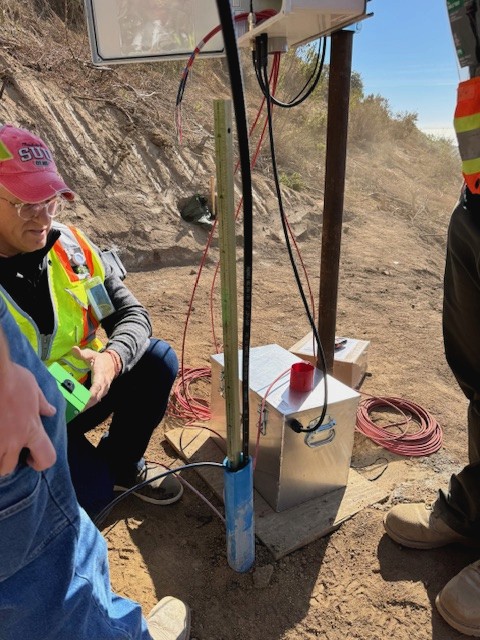
Each ShapeArray was connected to Campbell Scientific datalogger equipment, which collected and stored movement data locally. Because the project site had no reliable cellular coverage and was located in a remote coastal corridor, radio communication was used to transmit data from each instrument location back to a central datalogger. From that central point, the system used Starlink satellite internet to push data to a remote visualization platform, allowing authorized engineers and project managers to review slope movement from anywhere in the world with internet access.
This remote communication architecture was critical because it allowed decision-makers to monitor slope behavior continuously without depending on physical site visits, which were difficult due to location, terrain, and changing site conditions. Instead of waiting for field crews to manually retrieve readings, movement trends could be reviewed immediately as excavation progressed, helping determine when work could safely continue and when additional caution was needed.
In addition to the subsurface instrumentation, surface movement on the project was also tracked using a robotic total station operated by another contractor. However, that system was not configured for automated remote monitoring, so engineers were required to visit the site approximately twice per week to collect measurements manually. While those readings provided valuable surface displacement information, the continuous remote Shape Array system supplied a understanding of changing slope conditions between field visits. This is another example of how different measurement systems have different strengths and weaknesses and the correlation creates a strong overlapping picture.
Monitoring Approach and System Deployment
To support slope stabilization efforts at Regent's Slide, Measure installed multiple ShapeAccelArray systems at key locations across the active slide area to continuously track subsurface deformation and help define the active failure zone. These arrays were selected because they could provide near real-time movement profiles through the depth of the slope, allowing engineers to identify where displacement was occurring and where stable material began below the slide mass.
Each ShapeArray was connected to Campbell Scientific datalogger equipment, which collected and stored movement data locally. Because the project site had no reliable cellular coverage and was located in a remote coastal corridor, radio communication was used to transmit data from each instrument location back to a central datalogger. From that central point, the system used Starlink satellite internet to push data to a remote visualization platform, allowing authorized engineers and project managers to review slope movement from anywhere in the world with internet access.
This remote communication architecture was critical because it allowed decision-makers to monitor slope behavior continuously without depending on physical site visits, which were difficult due to location, terrain, and changing site conditions. Instead of waiting for field crews to manually retrieve readings, movement trends could be reviewed immediately as excavation progressed, helping determine when work could safely continue and when additional caution was needed.
In addition to the subsurface instrumentation, surface movement on the project was also tracked using a robotic total station operated by another contractor. However, that system was not configured for automated remote monitoring, so engineers were required to visit the site approximately twice per week to collect measurements manually. While those readings provided valuable surface displacement information, the continuous remote Shape Array system supplied a understanding of changing slope conditions between field visits. This is another example of how different measurement systems have different strengths and weaknesses and the correlation creates a strong overlapping picture.
Other Interesting Projects
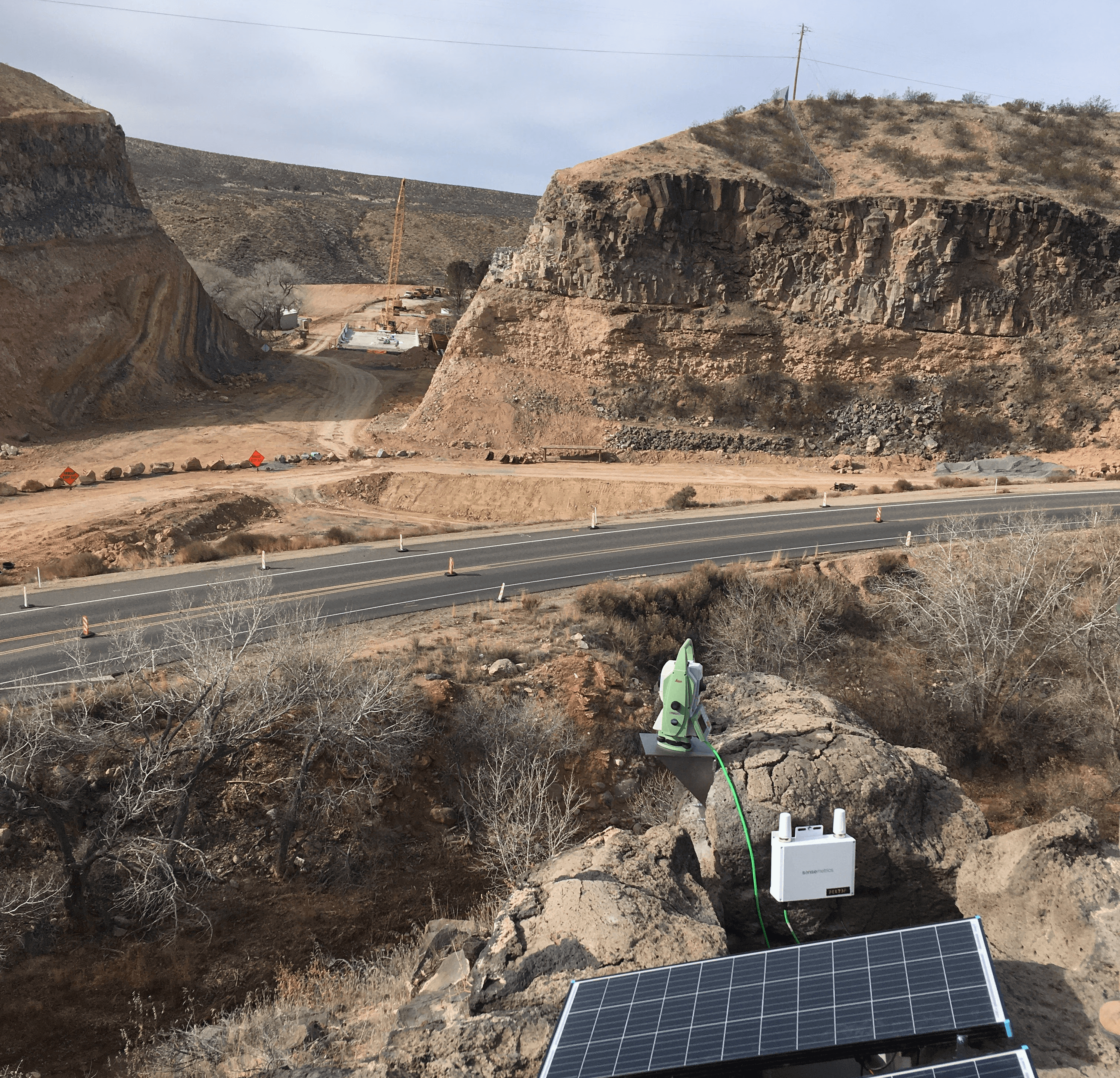
Torqueville
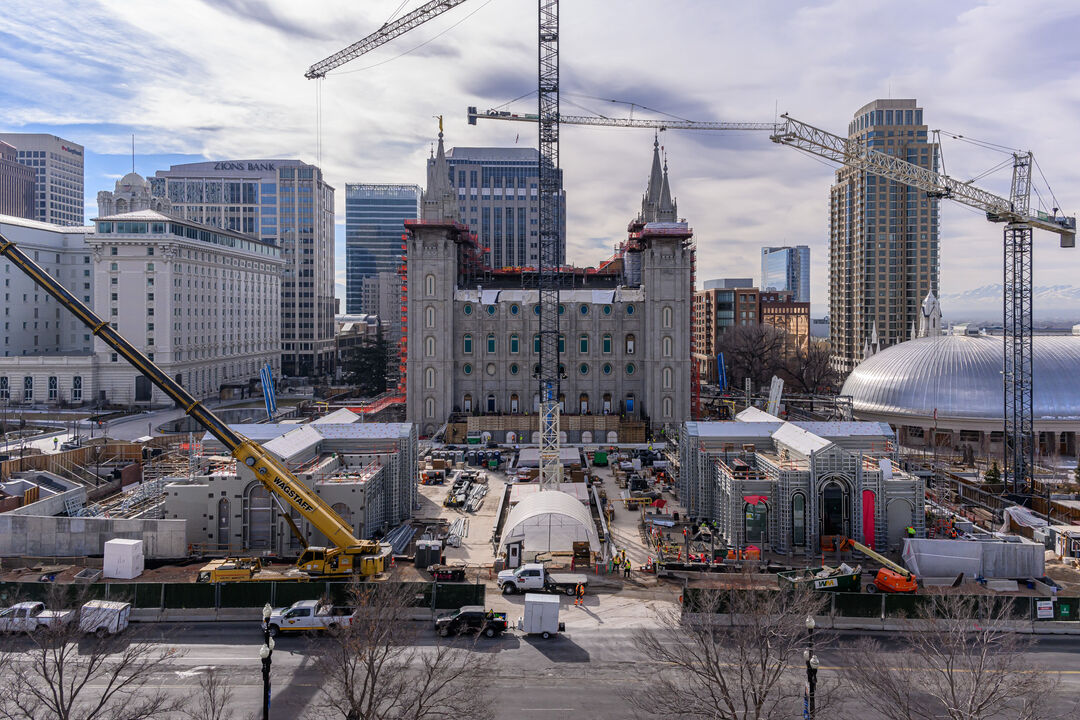
Salt Lake Temple Renovation
Monitoring Approach and System Deployment
Engineering Legacy
To support slope stabilization efforts at Regent's Slide, Measure installed multiple ShapeAccelArray systems at key locations across the active slide area to continuously track subsurface deformation and help define the active failure zone. These arrays were selected because they could provide near real-time movement profiles through the depth of the slope, allowing engineers to identify where displacement was occurring and where stable material began below the slide mass.
Each ShapeArray was connected to Campbell Scientific datalogger equipment, which collected and stored movement data locally. Because the project site had no reliable cellular coverage and was located in a remote coastal corridor, radio communication was used to transmit data from each instrument location back to a central datalogger. From that central point, the system used Starlink satellite internet to push data to a remote visualization platform, allowing authorized engineers and project managers to review slope movement from anywhere in the world with internet access.
This remote communication architecture was critical because it allowed decision-makers to monitor slope behavior continuously without depending on physical site visits, which were difficult due to location, terrain, and changing site conditions. Instead of waiting for field crews to manually retrieve readings, movement trends could be reviewed immediately as excavation progressed, helping determine when work could safely continue and when additional caution was needed.
In addition to the subsurface instrumentation, surface movement on the project was also tracked using a robotic total station operated by another contractor. However, that system was not configured for automated remote monitoring, so engineers were required to visit the site approximately twice per week to collect measurements manually. While those readings provided valuable surface displacement information, the continuous remote Shape Array system supplied a understanding of changing slope conditions between field visits. This is another example of how different measurement systems have different strengths and weaknesses and the correlation creates a strong overlapping picture.
To support slope stabilization efforts at Regent's Slide, Measure installed multiple ShapeAccelArray systems at key locations across the active slide area to continuously track subsurface deformation and help define the active failure zone. These arrays were selected because they could provide near real-time movement profiles through the depth of the slope, allowing engineers to identify where displacement was occurring and where stable material began below the slide mass.
Each ShapeArray was connected to Campbell Scientific datalogger equipment, which collected and stored movement data locally. Because the project site had no reliable cellular coverage and was located in a remote coastal corridor, radio communication was used to transmit data from each instrument location back to a central datalogger. From that central point, the system used Starlink satellite internet to push data to a remote visualization platform, allowing authorized engineers and project managers to review slope movement from anywhere in the world with internet access.
This remote communication architecture was critical because it allowed decision-makers to monitor slope behavior continuously without depending on physical site visits, which were difficult due to location, terrain, and changing site conditions. Instead of waiting for field crews to manually retrieve readings, movement trends could be reviewed immediately as excavation progressed, helping determine when work could safely continue and when additional caution was needed.
In addition to the subsurface instrumentation, surface movement on the project was also tracked using a robotic total station operated by another contractor. However, that system was not configured for automated remote monitoring, so engineers were required to visit the site approximately twice per week to collect measurements manually. While those readings provided valuable surface displacement information, the continuous remote Shape Array system supplied a understanding of changing slope conditions between field visits. This is another example of how different measurement systems have different strengths and weaknesses and the correlation creates a strong overlapping picture.
Project Value
Real-time monitoring allowed excavation crews to work more efficiently by showing when movement had stabilized and when it was safe to continue removing material. Instead of relying only on periodic field observations, the team could make decisions using continuous subsurface data. This reduced unnecessary stoppages, helped avoid over-excavation, and gave engineers confidence to advance work only when conditions supported it. The result was a faster, more informed construction effort supported by the field execution of California Department of Transportation and Papich Construction Company under extremely difficult slope conditions.
Other Interesting projects
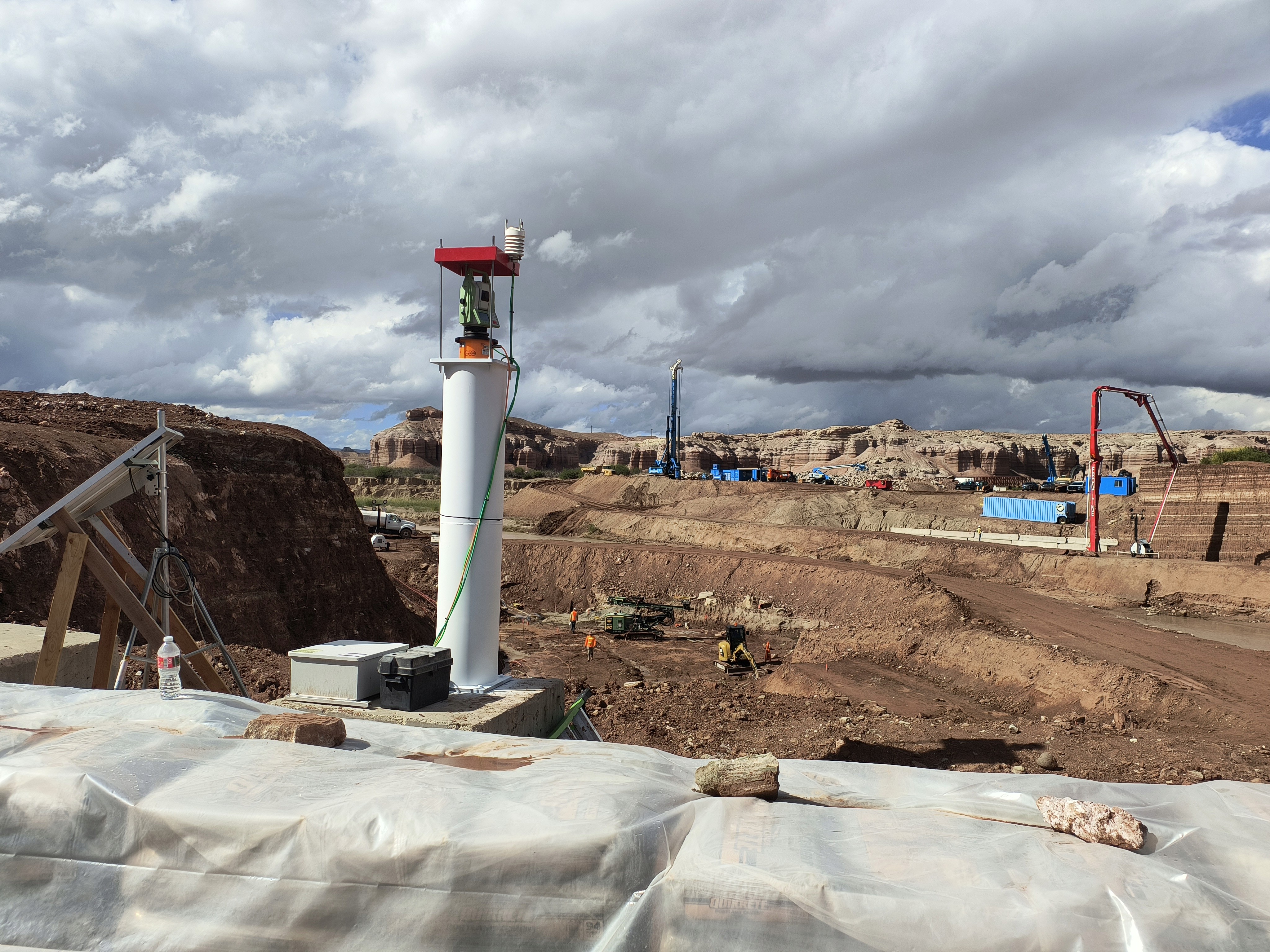
Hanksville Diversion
Salt Lake Temple Renovation
Salt Lake Temple Renovation
Other Interesting projects
Hanksville Diversion
Salt Lake Temple Renovation