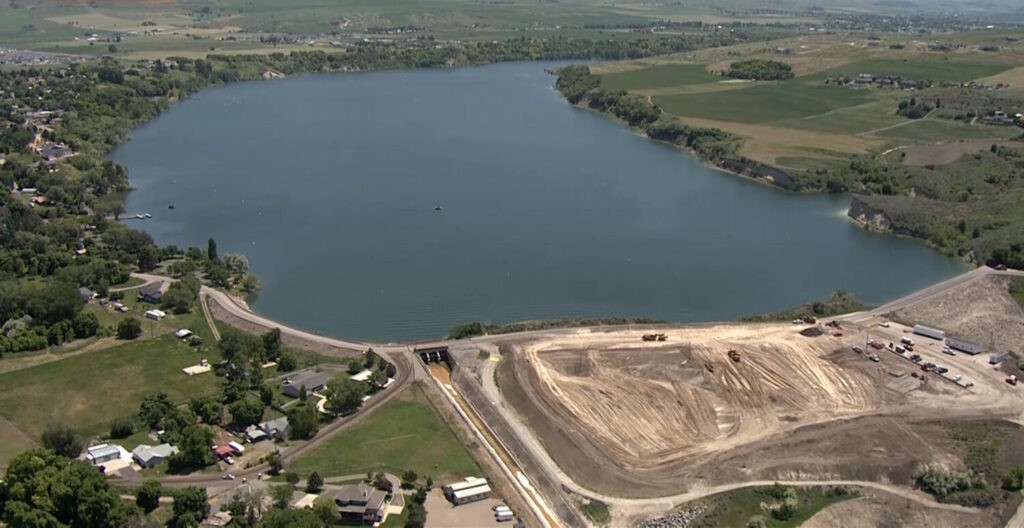
Hyrum Dam Spillway
Hyrum Dam Spillway
Hyrum Dam Spillway
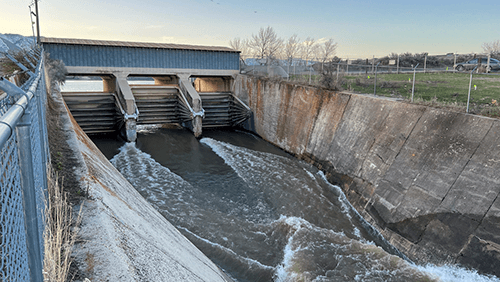
Hyrum Dam Spillway
Hyrum Dam Spillway
Hyrum Dam Spillway
Hyrum Dam Spillway

Hyrum Dam, Hyrum, Utah
Hyrum Dam, Hyrum, Utah
Hyrum Dam, Hyrum, Utah
Hyrum Dam is an earthfill structure on the Little Bear River in northern Utah, where aging embankment infrastructure, active seepage, and fluctuating reservoir levels create ongoing dam‑safety and performance‑monitoring challenges. The U.S. Bureau of Reclamation and the Hyrum Irrigation Company have prioritized improved surveillance of the dam’s behavior as part of a broader risk‑reduction and asset‑management effort, focusing on how internal seepage, pore pressures, and deformation respond to seasonal and operational changes. Because the dam sits immediately upstream of developed agricultural and residential areas, understanding its performance in near real time has become essential for both regulatory compliance and public safety.
Hyrum Dam is an earthfill structure on the Little Bear River in northern Utah, where aging embankment infrastructure, active seepage, and fluctuating reservoir levels create ongoing dam‑safety and performance‑monitoring challenges. The U.S. Bureau of Reclamation and the Hyrum Irrigation Company have prioritized improved surveillance of the dam’s behavior as part of a broader risk‑reduction and asset‑management effort, focusing on how internal seepage, pore pressures, and deformation respond to seasonal and operational changes. Because the dam sits immediately upstream of developed agricultural and residential areas, understanding its performance in near real time has become essential for both regulatory compliance and public safety.
Hyrum Dam is an earthfill structure on the Little Bear River in northern Utah, where aging embankment infrastructure, active seepage, and fluctuating reservoir levels create ongoing dam‑safety and performance‑monitoring challenges. The U.S. Bureau of Reclamation and the Hyrum Irrigation Company have prioritized improved surveillance of the dam’s behavior as part of a broader risk‑reduction and asset‑management effort, focusing on how internal seepage, pore pressures, and deformation respond to seasonal and operational changes. Because the dam sits immediately upstream of developed agricultural and residential areas, understanding its performance in near real time has become essential for both regulatory compliance and public safety.
Hyrum Dam is an earthfill structure on the Little Bear River in northern Utah, where aging embankment infrastructure, active seepage, and fluctuating reservoir levels create ongoing dam‑safety and performance‑monitoring challenges. The U.S. Bureau of Reclamation and the Hyrum Irrigation Company have prioritized improved surveillance of the dam’s behavior as part of a broader risk‑reduction and asset‑management effort, focusing on how internal seepage, pore pressures, and deformation respond to seasonal and operational changes. Because the dam sits immediately upstream of developed agricultural and residential areas, understanding its performance in near real time has become essential for both regulatory compliance and public safety.
Monitoring Objectives and Instrumentation Strategy
The primary goal of the Hyrum Dam monitoring upgrade is to give engineers clearer, more continuous insight into how the embankment and foundation respond to reservoir operations, hydrologic loading, and long‑term aging. The project team identified several key questions: where seepage is concentrated, how pore pressures change through the embankment over time, and whether any measurable deformation trends appear that might indicate developing instability. To answer these questions, the program combines legacy instrumentation with new automated systems, creating a single integrated platform for dam‑safety decision‑making.
The proposed system centers on enhanced piezometric and seepage monitoring in critical zones of the dam and its abutments, complemented by improved water‑level and flow‑measurement at downstream locations. This approach is designed to move the project from periodic manual readings toward continuous, high‑resolution data that can be trended, alarmed, and directly compared with operating conditions.
System architecture and instruments
At the core of the Hyrum Dam monitoring system are Campbell Scientific dataloggers configured to collect, store, and transmit readings from multiple sensor types around the embankment. These dataloggers are housed in weather‑resistant enclosures near existing piezometers, seepage collection points, and staff gages so that legacy instruments can be upgraded with electronic transducers and integrated into a common acquisition platform.
The upgraded instrumentation package includes:
Vibrating‑wire or pressure‑transducer piezometers installed or retrofitted into existing standpipes to measure pore‑water pressures and water levels within the embankment and foundation materials.
Flow and level sensors at seepage collection points, toe drains, and outlet structures to quantify changes in seepage discharge under different reservoir conditions.
Reservoir level sensors that provide precise head information, allowing engineers to correlate internal responses with external loading.
All instruments are tied into Campbell Scientific dataloggers via SDI‑12 or analog channels and powered with solar‑panel and battery systems sized for year‑round operation in northern Utah climate conditions. Data are transmitted to a secure cloud‑based server over cellular telemetry, where a web dashboard provides plots, alarms, and reporting tools formatted for dam‑safety engineers, operations staff, and regulatory reviewers
Monitoring Objectives and Instrumentation Strategy
The primary goal of the Hyrum Dam monitoring upgrade is to give engineers clearer, more continuous insight into how the embankment and foundation respond to reservoir operations, hydrologic loading, and long‑term aging. The project team identified several key questions: where seepage is concentrated, how pore pressures change through the embankment over time, and whether any measurable deformation trends appear that might indicate developing instability. To answer these questions, the program combines legacy instrumentation with new automated systems, creating a single integrated platform for dam‑safety decision‑making.
The proposed system centers on enhanced piezometric and seepage monitoring in critical zones of the dam and its abutments, complemented by improved water‑level and flow‑measurement at downstream locations. This approach is designed to move the project from periodic manual readings toward continuous, high‑resolution data that can be trended, alarmed, and directly compared with operating conditions.
System architecture and instruments
At the core of the Hyrum Dam monitoring system are Campbell Scientific dataloggers configured to collect, store, and transmit readings from multiple sensor types around the embankment. These dataloggers are housed in weather‑resistant enclosures near existing piezometers, seepage collection points, and staff gages so that legacy instruments can be upgraded with electronic transducers and integrated into a common acquisition platform.
The upgraded instrumentation package includes:
Vibrating‑wire or pressure‑transducer piezometers installed or retrofitted into existing standpipes to measure pore‑water pressures and water levels within the embankment and foundation materials.
Flow and level sensors at seepage collection points, toe drains, and outlet structures to quantify changes in seepage discharge under different reservoir conditions.
Reservoir level sensors that provide precise head information, allowing engineers to correlate internal responses with external loading.
All instruments are tied into Campbell Scientific dataloggers via SDI‑12 or analog channels and powered with solar‑panel and battery systems sized for year‑round operation in northern Utah climate conditions. Data are transmitted to a secure cloud‑based server over cellular telemetry, where a web dashboard provides plots, alarms, and reporting tools formatted for dam‑safety engineers, operations staff, and regulatory reviewers
Monitoring Objectives and Instrumentation Strategy
The primary goal of the Hyrum Dam monitoring upgrade is to give engineers clearer, more continuous insight into how the embankment and foundation respond to reservoir operations, hydrologic loading, and long‑term aging. The project team identified several key questions: where seepage is concentrated, how pore pressures change through the embankment over time, and whether any measurable deformation trends appear that might indicate developing instability. To answer these questions, the program combines legacy instrumentation with new automated systems, creating a single integrated platform for dam‑safety decision‑making.
The proposed system centers on enhanced piezometric and seepage monitoring in critical zones of the dam and its abutments, complemented by improved water‑level and flow‑measurement at downstream locations. This approach is designed to move the project from periodic manual readings toward continuous, high‑resolution data that can be trended, alarmed, and directly compared with operating conditions.
System architecture and instruments
At the core of the Hyrum Dam monitoring system are Campbell Scientific dataloggers configured to collect, store, and transmit readings from multiple sensor types around the embankment. These dataloggers are housed in weather‑resistant enclosures near existing piezometers, seepage collection points, and staff gages so that legacy instruments can be upgraded with electronic transducers and integrated into a common acquisition platform.
The upgraded instrumentation package includes:
Vibrating‑wire or pressure‑transducer piezometers installed or retrofitted into existing standpipes to measure pore‑water pressures and water levels within the embankment and foundation materials.
Flow and level sensors at seepage collection points, toe drains, and outlet structures to quantify changes in seepage discharge under different reservoir conditions.
Reservoir level sensors that provide precise head information, allowing engineers to correlate internal responses with external loading.
All instruments are tied into Campbell Scientific dataloggers via SDI‑12 or analog channels and powered with solar‑panel and battery systems sized for year‑round operation in northern Utah climate conditions. Data are transmitted to a secure cloud‑based server over cellular telemetry, where a web dashboard provides plots, alarms, and reporting tools formatted for dam‑safety engineers, operations staff, and regulatory reviewers.
The primary goal of the Hyrum Dam monitoring upgrade is to give engineers clearer, more continuous insight into how the embankment and foundation respond to reservoir operations, hydrologic loading, and long‑term aging. The project team identified several key questions: where seepage is concentrated, how pore pressures change through the embankment over time, and whether any measurable deformation trends appear that might indicate developing instability. To answer these questions, the program combines legacy instrumentation with new automated systems, creating a single integrated platform for dam‑safety decision‑making.
The proposed system centers on enhanced piezometric and seepage monitoring in critical zones of the dam and its abutments, complemented by improved water‑level and flow‑measurement at downstream locations. This approach is designed to move the project from periodic manual readings toward continuous, high‑resolution data that can be trended, alarmed, and directly compared with operating conditions.
System architecture and instruments
At the core of the Hyrum Dam monitoring system are Campbell Scientific dataloggers configured to collect, store, and transmit readings from multiple sensor types around the embankment. These dataloggers are housed in weather‑resistant enclosures near existing piezometers, seepage collection points, and staff gages so that legacy instruments can be upgraded with electronic transducers and integrated into a common acquisition platform.
The upgraded instrumentation package includes:
Vibrating‑wire or pressure‑transducer piezometers installed or retrofitted into existing standpipes to measure pore‑water pressures and water levels within the embankment and foundation materials.
Flow and level sensors at seepage collection points, toe drains, and outlet structures to quantify changes in seepage discharge under different reservoir conditions.
Reservoir level sensors that provide precise head information, allowing engineers to correlate internal responses with external loading.
All instruments are tied into Campbell Scientific dataloggers via SDI‑12 or analog channels and powered with solar‑panel and battery systems sized for year‑round operation in northern Utah climate conditions. Data are transmitted to a secure cloud‑based server over cellular telemetry, where a web dashboard provides plots, alarms, and reporting tools formatted for dam‑safety engineers, operations staff, and regulatory reviewers.
The Hyrum Dam monitoring upgrade transforms an intermittently observed structure into a continuously measured, data‑rich system that supports modern dam‑safety practice. By pairing existing instruments with new sensors, dataloggers, and telemetry, the project delivers a clearer picture of how the embankment and foundation respond to hydrologic events, reservoir operations, and long‑term aging, enabling earlier identification of concerning trends.
For the owner and operators, this means decisions about reservoir levels, inspections, and maintenance can be based on live data instead of sparse historical readings, improving both safety margins and operational confidence. For the broader community downstream, the upgraded instrumentation provides assurance that engineers are watching the dam’s performance continuously, not just during annual inspections or post‑event surveys.